Concrete Repair vs. Replacement: Herriman Homeowner's Guide
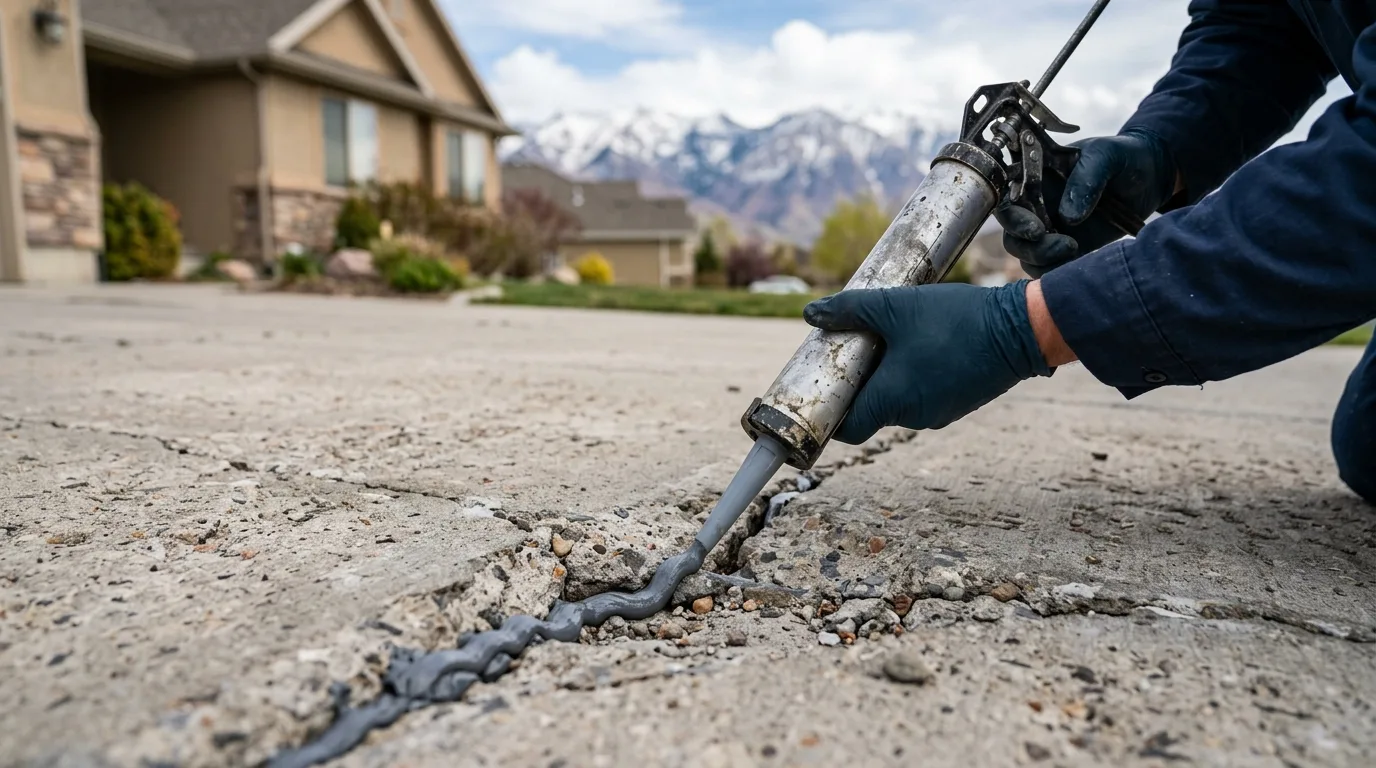
The concrete repair vs. replacement question comes up constantly in Herriman, where freeze-thaw cycles accelerate damage faster than in most markets. The answer isn’t always obvious — and a contractor who always recommends replacement or always recommends repair isn’t giving you an honest assessment. This guide gives you a framework for making the decision yourself, so you can evaluate any contractor’s recommendation critically.
Honest Repair vs. Replacement Assessment in Herriman
We tell you what makes financial sense — not what makes us more money. Free assessments.
The Core Question: Will the Repair Hold?
Concrete repair is worth doing when the repair will address the actual problem and hold for a reasonable period — typically at least 5 years. It’s not worth doing when:
- The underlying problem (drainage failure, sub-base collapse, widespread structural damage) will cause the same damage to recur within 1–2 years regardless of the repair quality
- The repair cost is more than 50–60% of full replacement cost, especially if the existing concrete is more than 20 years old
- The existing concrete surface is so deteriorated that repair materials don’t have a sound base to bond to
Herriman’s climate creates one specific scenario where the repair calculation changes: fall timing. A crack that would typically fall into the “repair for now, replace in 3–4 years” category should be repaired before winter if you’re reading this in September or October. The reason: Herriman’s freeze-thaw cycles will widen that crack significantly over winter, potentially moving it from the repair category into the replacement category. A fall repair buys you another full season or two before replacement becomes necessary.
Repair Makes Sense When:
The damage is isolated to the surface layer. Spalling (surface flaking), minor cracks under 1/4 inch, and surface discoloration are surface-layer issues that can be addressed with patching or resurfacing without structural implications. If the slab beneath the damage is solid and level, repair makes sense.
Cracks are few in number and stable. One or two cracks that haven’t changed significantly in width over 2–3 years are repair candidates. A quick test: mark the crack ends with chalk and check in 3 months — if they haven’t grown, the sub-base is stable enough to support a repair.
The concrete is relatively young. Concrete installed in the last 10–15 years in Herriman with damage that’s clearly from a discrete event (tree root, heavy vehicle, isolated settlement) is more often a repair than a replacement situation. The remaining service life justifies the repair investment.
Drainage is intact. Driveways and patios where water runs away from the structure correctly, without pooling, are better repair candidates. When drainage is failing, repair addresses the damage but not the mechanism creating ongoing damage.
Get a Free Concrete Assessment in Herriman, UT
We evaluate your concrete honestly and explain our recommendation in detail — no pressure.
Replacement Makes More Sense When:
Cracking is widespread and interconnected (map cracking). This pattern indicates the sub-base has failed across the slab, not in isolated spots. Patching map-cracked concrete is temporary at best — the cracks will recur because the underlying cause hasn’t been fixed.
Settlement exceeds 1 inch. Sections that have dropped more than an inch create drainage problems, trip hazards, and indicate sub-base failure that typically can’t be corrected without reconstruction. Mudjacking can help minor settlement; major settlement usually requires replacement.
The concrete is more than 25 years old and has widespread surface damage. Resurfacing overlays need a sound, stable surface to bond to. Aging concrete with widespread surface delamination — common in Fort Herriman properties where 1990s-era driveways are reaching end of life — often doesn’t provide adequate bond for an overlay. When repair materials cost more than 50% of a replacement and the base concrete is poor, replacement with proper new specifications is the better investment.
Drainage has permanently failed. When the original driveway grade was wrong or has been distorted by settlement beyond the point mudjacking can correct, full replacement with proper drainage engineering is the only solution that stops recurring damage.
Cost Comparison: Repair vs. Replacement in Herriman
| Repair Type | Typical Cost |
|---|---|
| Crack filling (per crack) | $100–$400 |
| Spall patching (isolated) | $200–$800 |
| Full resurfacing overlay | $3–$7/sq ft |
| Replacement (broom finish) | $8–$16/sq ft |
| Replacement (stamped) | $14–$20/sq ft |
For a standard 700 sq ft two-car driveway in Herriman, full resurfacing runs $2,100–$4,900 while full replacement runs $5,600–$11,200. The break-even point where replacement becomes more cost-effective is typically when resurfacing cost exceeds $4,000–$5,000 for concrete with significant remaining structural problems that resurfacing won’t address.
The Decision Matrix
Run through these questions in order:
- Is the sub-base stable? (No settlement over 1 inch, no rocking slabs) → If no: lean toward replacement
- Is drainage functional? (Water flows away from structure) → If no: evaluate whether drainage can be corrected during repair
- Is the damage isolated (less than 25% of surface)? → If no: lean toward replacement
- Is the concrete less than 20 years old? → If yes: lean toward repair
- Is repair cost less than 50% of replacement cost? → If yes: repair is likely the better investment
If you’re uncertain after running this framework, a professional assessment is worthwhile. We provide free assessments in Herriman with honest recommendations based on what we find, not what generates more revenue.
Frequently Asked Questions
Can a concrete driveway be resurfaced in Herriman?
Yes — concrete resurfacing is an effective option for Herriman driveways with surface damage but a structurally sound base. A bonded concrete overlay $3–$7/sq ft restores a clean, sealed surface and is far less expensive than full replacement. The critical requirement is that the existing concrete base is structurally sound, level, and provides adequate bond. An assessment confirms whether your driveway is a candidate.
How many times can concrete be repaired before it needs replacement?
There’s no fixed number — it depends on what’s being repaired and why. Surface cracks filled once or twice are perfectly normal for a concrete driveway over a 30-year life. However, cracks that recur in the same locations after filling indicate an ongoing sub-base or drainage problem. When the same damage keeps returning despite repair, you’re investing in temporary solutions that are slowing down the replacement decision rather than eliminating it.
What questions should I ask a concrete contractor about repair vs. replacement?
Ask: “What is causing this damage?” and “Will the repair address that cause, or just the symptom?” A contractor who can’t clearly explain the underlying cause of damage you’re having repaired may not be giving you the right repair recommendation. Also ask: “What is the expected lifespan of this repair?” and “At what point would you recommend replacement instead?” Honest answers to these questions distinguish quality contractors from those who just want a quick repair sale.
Concrete Repair or Replacement in Herriman — Get the Right Answer
Call (888) 376-0955 for a free assessment. We tell you what makes sense for your property.
Related: